How to Use Your Ovulation Cycle to Optimize Weight Loss
Many women feel frustrated with weight fluctuations, especially when they follow a strict diet. But what if your ovulation cycle and weight loss are more connected than you think? Understanding how hormonal shifts influence fat loss can transform your approach to health. The truth is, your menstrual cycle hormones influence your metabolism, energy levels, and cravings. By understanding the four phases of the menstrual cycle, you can fine-tune your nutrition and workouts to support weight loss naturally.
Let’s break it down phase by phase and explore how to align your fitness and diet strategy with your body’s hormonal rhythm.
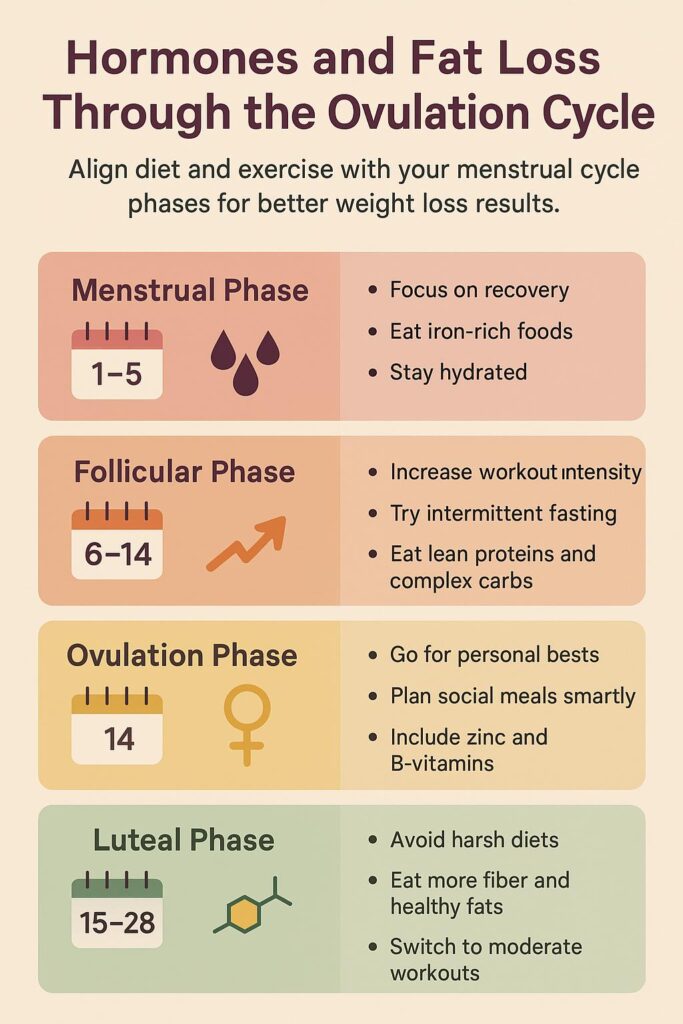
1. Menstrual Phase (Days 1–5)
Your period marks the first day of the cycle. Estrogen and progesterone levels drop, leading to fatigue and a lower metabolic rate. It’s normal to Estrogen eel tired, less motivated, or even bloated.
Tips for weight loss during menstruation:
- Focus on recovery. Choose light activities like walking, stretching, or gentle yoga.
- Eat iron-rich foods. Replenish iron lost during bleeding with spinach, red meat, or legumes.
- Stay hydrated. Bloating often worsens due to dehydration.
Avoid extreme calorie restriction during this phase. Your body needs fuel for repair.
2. Follicular Phase (Days 6–14)
As your period ends, estrogen levels start rising. This hormone boosts your energy, improves insulin sensitivity, and enhances your mood.
Use this phase to push fat loss forward, especially if you’re following a cycle syncing diet designed around hormonal changes.
- Increase workout intensity. Your body tolerates strength training and cardio better now.
- Try intermittent fasting. Your blood sugar stays more stable during this time.
- Eat lean proteins and complex carbs. Your metabolism begins to speed up.
This is a powerful window to build muscle and burn fat efficiently.
3. Ovulation Phase (Around Day 14)
Estrogen peaks, and testosterone levels rise slightly, increasing libido, motivation, and physical performance. You may feel more confident and energized.
Optimize this high-energy window:
- Go for personal bests. Try lifting heavier weights or doing intense HIIT workouts.
- Plan social meals smartly. Appetite may slightly decrease, so you can manage portions more easily.
- Include zinc and B-vitamins. These nutrients support ovulation and energy metabolism.
Be mindful, though: Some women experience a temporary water retention spike around ovulation. Still, this part of the ovulation cycle is optimal for fat loss, thanks to the peak in estrogen and performance.
4. Luteal Phase (Days 15–28)
After ovulation, progesterone becomes dominant. This hormone raises your basal body temperature and increases hunger. Many women report sugar cravings, mood swings, and energy dips.
Smart strategies for this phase:
- Avoid harsh diets. You may feel more irritable or tired if calories drop too low.
- Eat more fiber and healthy fats. They help control appetite and balance blood sugar.
- Switch to moderate workouts. Focus on lighter strength training, Pilates, or steady-state cardio.
Since your body burns slightly more calories (around 100–200 extra per day), maintain a clean, nutrient-dense diet rather than restricting too much.
Hormonal Cycle & Weight Loss Summary Table:
| Phase | Dominant Hormones | Best Exercise | Diet Focus | Notes |
| Menstrual | Low Estrogen & Progesterone | Light movement | Iron-rich, hydrating foods | Focus on recovery |
| Follicular | Rising Estrogen | High-intensity training | Lean protein, complex carbs | Great time to build muscle |
| Ovulation | Peak Estrogen & Testosterone | Intense workouts | Balanced macros, zinc, B-vitamins | Energy and libido peak |
| Luteal | High Progesterone | Moderate training | Fiber, healthy fats | Cravings and hunger increase |
Bonus: Track Your Cycle for Success
To get the most out of your menstrual cycle, start using a period tracker app. Look for patterns in your energy, cravings, and weight each week. Sync your workout and meal plan accordingly.
You can also plan lower-carb days during the follicular phase and higher-calorie, higher-fat days during the luteal phase. This flexible approach matches your body’s real-time needs and avoids frustration.
Final Thoughts
Understanding your hormonal fluctuations allows you to take control of your body, rather than fight against it. Each phase offers unique advantages, and when you adapt your fitness and nutrition accordingly, weight loss becomes smoother and more sustainable.
Instead of viewing your period as an obstacle, treat your cycle as a roadmap. Your hormones are powerful allies when you listen to them, your body responds with better energy, performance, and fat loss results.
If you’re interested in health-related topics, you may also find the following resources helpful.