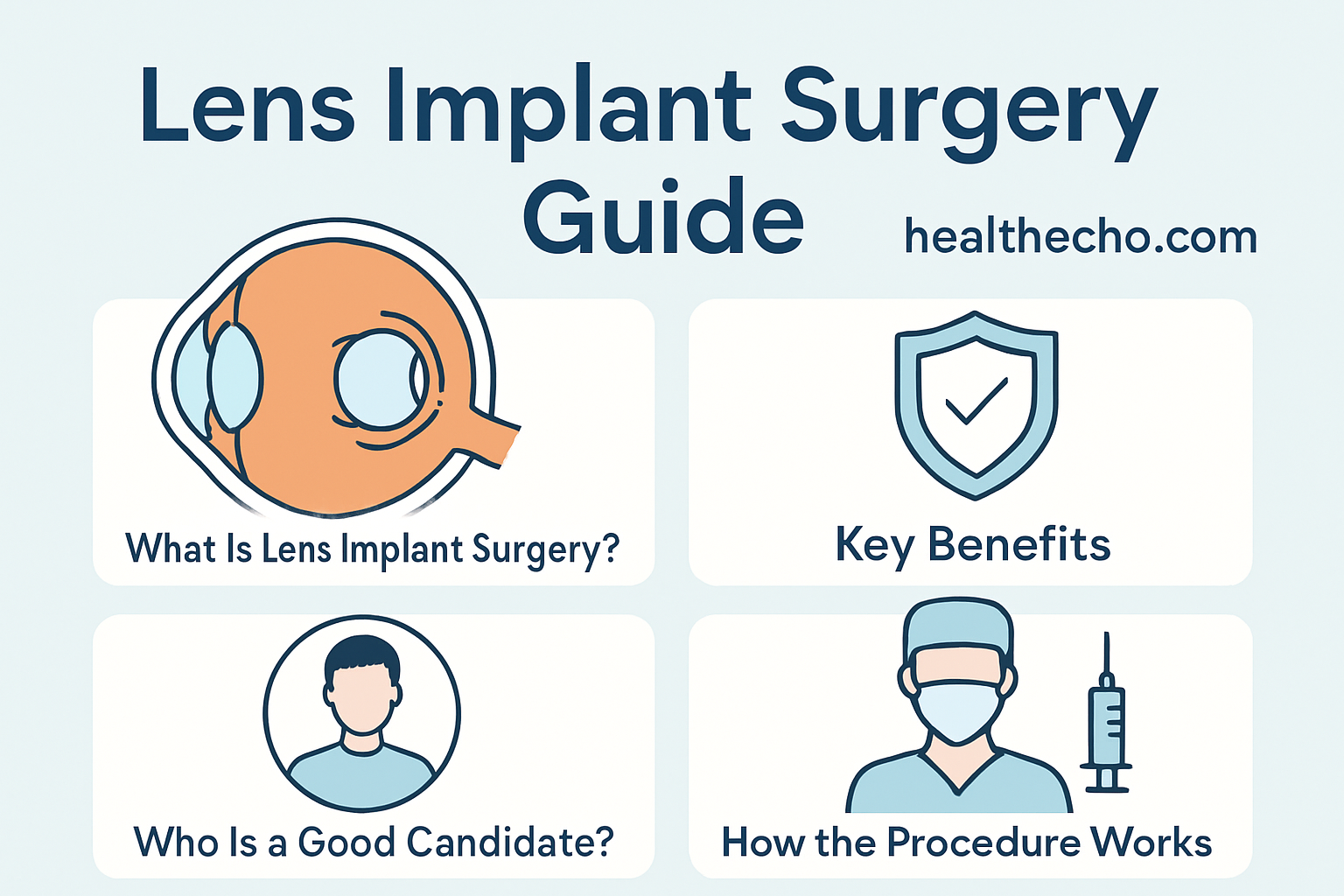
Lens Implant Surgery: A Clear Guide for HealthEcho Readers
Lens implant surgery, known as 렌즈삽입술, is becoming a major solution for people who want sharp, stable vision without depending on glasses or contact lenses. As a health-focused web magazine, healthecho.com values evidence-based information, and this procedure has gained strong attention for its effectiveness, reversibility, and suitability for high-prescription patients.
In this guide, you’ll learn what the surgery involves, who benefits from it most, and why clinics specializing in advanced eye care now recommend it as a safe alternative to corneal-reshaping procedures.
What Is Lens Implant Surgery?
Lens implant surgery places an artificial lens inside the eye, behind the iris and in front of the natural lens. Unlike LASIK or SMILE, it does not shave the cornea, which makes it ideal for people with thin corneas or extremely high myopia.
The inserted lens works like a permanent internal contact lens, offering excellent clarity while remaining completely invisible from the outside.
Key Benefits of 렌즈삽입술
1. Reversible Procedure
One of the greatest advantages is reversibility. The lens can be removed or replaced if vision needs change over time.
2. Sharp Vision for High Prescriptions
People with prescriptions stronger than minus six often struggle with glasses distortion. Implantable lenses help restore natural, wide-angle clarity.
3. Stable Night Vision
Compared with corneal surgeries that may cause halos or glare, modern lens implants show strong night-vision performance.
4. Corneal Safety
Because the corneal surface remains untouched, patients with thin or irregular corneas have a safer option.
Who Is a Good Candidate?
You may be suitable for lens implant surgery if:
- Your myopia is high and increasing
- Your cornea is thin or irregular
- You have dry-eye symptoms that worsen with contact lens use
- You prefer a reversible and less invasive option
A detailed eye exam is essential, including anterior chamber depth, endothelial cell count, and overall ocular health.
How the Procedure Works
- Pre-operative eye measurement
- Placement of the lens through a micro-incision
- Lens positioning behind the iris
- Quick recovery and rapid visual improvement
The surgery usually takes about fifteen to twenty minutes per eye, and many patients experience significantly clearer vision within a day.
Recovery and Aftercare
Most patients return to everyday activities quickly. However, proper aftercare includes:
- Avoiding water exposure for several days
- Using prescribed eye drops
- Limiting strenuous exercise
- Attending follow-up examinations
These steps help prevent inflammation and ensure the lens settles smoothly.
Where to Learn More
For readers who want to explore a clinic specializing in implantable lens procedures, you may refer to one recommended page that provides more clinical details:
👉 렌즈삽입술 안내 페이지